IGCSE Science Study Tips: Physics, Chemistry and Biology
Study IGCSE Physics, Chemistry, and Biology more effectively with syllabus checklists, diagrams, definitions, practical skills, and past papers.

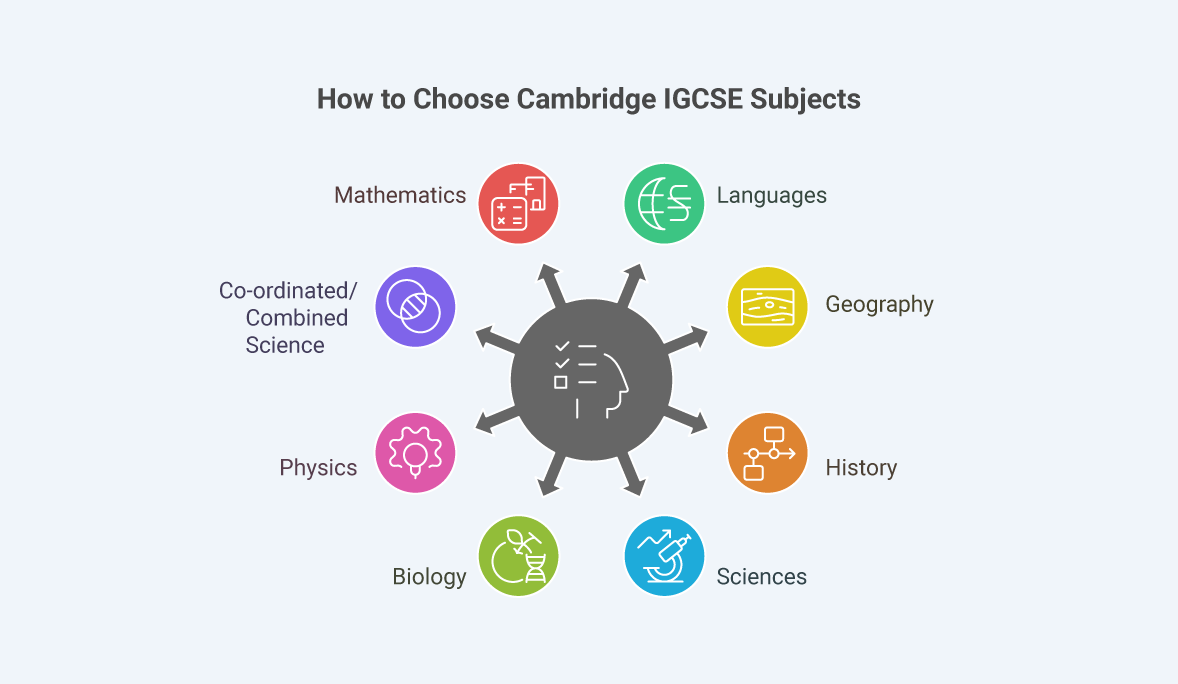
IGCSE Science can be challenging because it combines understanding, memorisation, calculations, diagrams, experiments, and application. Whether you study Biology, Chemistry, Physics, or Combined Science, the right revision strategy can help you improve your grade.
Science success depends on knowing the syllabus, understanding key concepts, using scientific vocabulary, and practising exam questions regularly.
Use the syllabus as a checklist
The syllabus tells you exactly what you need to know. Go through it topic by topic and mark each area as confident, needs revision, or difficult.
This helps you organise revision and avoid missing important content.
Biology: learn processes clearly
Biology includes topics such as cells, enzymes, nutrition, transport, respiration, photosynthesis, reproduction, inheritance, variation, organisms, and ecology.
To revise Biology well, focus on processes. For example, do not just memorise photosynthesis. Understand the word equation, limiting factors, leaf structure, and how the process is tested experimentally.
Use diagrams to revise systems such as the heart, lungs, digestive system, nervous system, and plant transport.
Chemistry: understand reactions and patterns
Chemistry includes atomic structure, bonding, chemical reactions, acids and bases, rates of reaction, electrolysis, organic chemistry, and quantitative chemistry.
Students should practise balancing equations, writing formulas, identifying reaction types, and explaining observations.
Chemistry becomes easier when you understand patterns, such as the reactivity series, periodic table trends, and bonding properties.
Physics: practise formulas and application
Physics includes forces, motion, energy, electricity, waves, thermal physics, magnetism, radioactivity, and space physics.
Learn formulas, but also understand when and how to use them. Always write the formula, substitute values, calculate carefully, and include units.
Many Physics questions test application, so practise unfamiliar problems.
Learn scientific vocabulary
Science mark schemes often require specific terms. For Biology, words like diffusion, osmosis, enzyme, pathogen, and homeostasis must be used accurately.
For Chemistry, terms like oxidation, reduction, ionic bonding, catalyst, and neutralisation are important.
For Physics, terms like resultant force, potential difference, current, frequency, and amplitude must be clear.
Practise diagrams and graphs
Science exams often include diagrams, circuits, apparatus, biological structures, and graphs.
Practise labelling diagrams neatly and interpreting graphs accurately. Learn how to describe trends using data.
Understand practical skills
Practical questions test variables, fair testing, accuracy, reliability, safety, graph plotting, and experimental improvements.
You should know the difference between independent, dependent, and control variables.
Use past papers
Past papers help you understand common question styles and mark scheme requirements. Complete topic-wise questions first, then full papers under timed conditions.
Final advice
IGCSE Science revision should combine understanding, memorisation, calculations, diagrams, and exam practice. Use the syllabus, revise actively, practise past papers, and learn from mistakes.
Need a tutor for this subject?
Share your city, programme stage and subject — the IB Gram advisor team replies with a small, honest shortlist.